
Why Self-Awareness Isn’t Enough
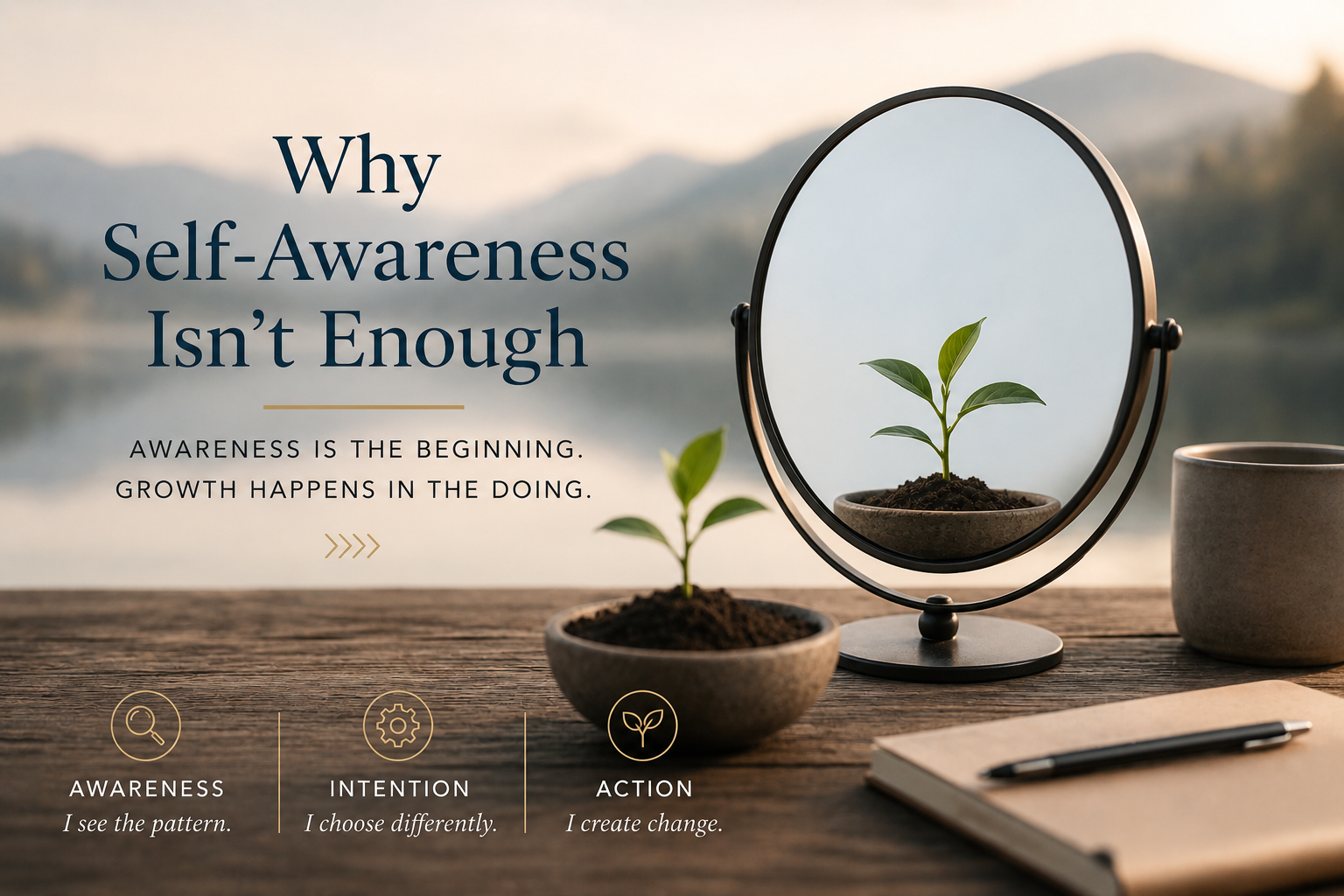
Awareness helps us see ourselves differently. Growth begins when we choose to respond differently.
If you've spent any time exploring leadership or personal development, you've probably heard that self-awareness is the foundation of effective leadership. I happen to agree. Leaders who understand their strengths, recognize their patterns, and acknowledge their blind spots are generally better equipped to build trust, navigate complexity, and create healthy relationships.
But over the years, I've also noticed something interesting. Many of the leaders I work with are incredibly self-aware. They can tell you exactly where they struggle. They know they become impatient when deadlines are tight. They recognize that they avoid difficult conversations or hesitate to delegate important work. They can even identify the stories they tell themselves when something doesn't go as planned. The awareness is there. The change, however, often isn't.
That's because awareness and transformation are not the same thing. Self-awareness is an incredible starting point, but it's only the beginning of the journey. It shines a light on the patterns we've developed over years of experience, helping us recognize behaviors we may never have noticed before. What it doesn't do is automatically replace those patterns with healthier ones.
Simply knowing we interrupt people doesn't make us better listeners. Recognizing that we struggle with perfectionism doesn't suddenly make it easier to let go of control. Understanding that we avoid conflict doesn't magically give us the courage to have the conversation we've been postponing. Awareness creates understanding. It doesn't create new habits.
That's where intentional practice becomes so important. Think about learning any meaningful skill. Reading a book about public speaking won't make you a confident presenter. Watching someone else play the piano won't teach your fingers where to go. Understanding how to ride a bicycle isn't the same as balancing on one for the first time.
Leadership is no different.
Growth happens in the space between what we know and what we consistently choose to do. That space isn't always comfortable. In fact, real leadership development often feels awkward before it feels natural. Pausing before reacting may feel forced at first. Asking a thoughtful question instead of immediately offering advice can require far more patience than simply giving the answer. Delegating a project instead of holding onto it may create anxiety long before it creates confidence. That's normal.
New leadership habits almost always feel unfamiliar because we're asking ourselves to respond differently than we have in the past. The goal isn't to eliminate discomfort. It's to practice new behaviors often enough that they gradually become part of who we are.
One of the biggest misconceptions about personal growth is that transformation happens in breakthrough moments. While those moments certainly exist, I've found that lasting change is usually much quieter.
- It happens in the pause before sending the email you immediately wanted to write.
- It happens when you choose curiosity instead of defensiveness during a difficult conversation.
- It happens when you ask one more question before offering your opinion.
- It happens when you notice an old pattern beginning to emerge and make a different choice anyway.
Those moments may seem small, but they accumulate over time. They slowly reshape not only the way we lead, but the person we are becoming. Perhaps that's why leadership is often described as a practice rather than a destination. We don't become exceptional leaders because we finally understand ourselves. We become exceptional leaders because we continue choosing behaviors that align with the kind of leader we want to become, even when those choices require intention, humility, and persistence.
Self-awareness opens the door. Intentional action is what carries us through it.
Reflection
As you think about your own leadership, what pattern have you become increasingly aware of over the past year?
Now ask yourself a second question.
What would it look like to intentionally practice a different response this week?
Rather than trying to change everything at once, choose one small behavior. Maybe it's pausing before responding. Maybe it's asking one more question. Maybe it's delegating something you've been holding onto. Meaningful leadership transformation rarely happens through dramatic change. More often, it's the result of small, intentional decisions repeated consistently over time.
Get in touch
Copyright © 2025 | Above Coaching | All Rights Reserved
Download the Coach Starter Guide
Download the Professional Development Guide
Need a different payment option? We’re here to help.
We want this training to be accessible and aligned. If you're facing a financial hurdle or need to talk through a creative solution, please schedule a connection call below: