The Difference Between Managing and Coaching in Modern Leadership
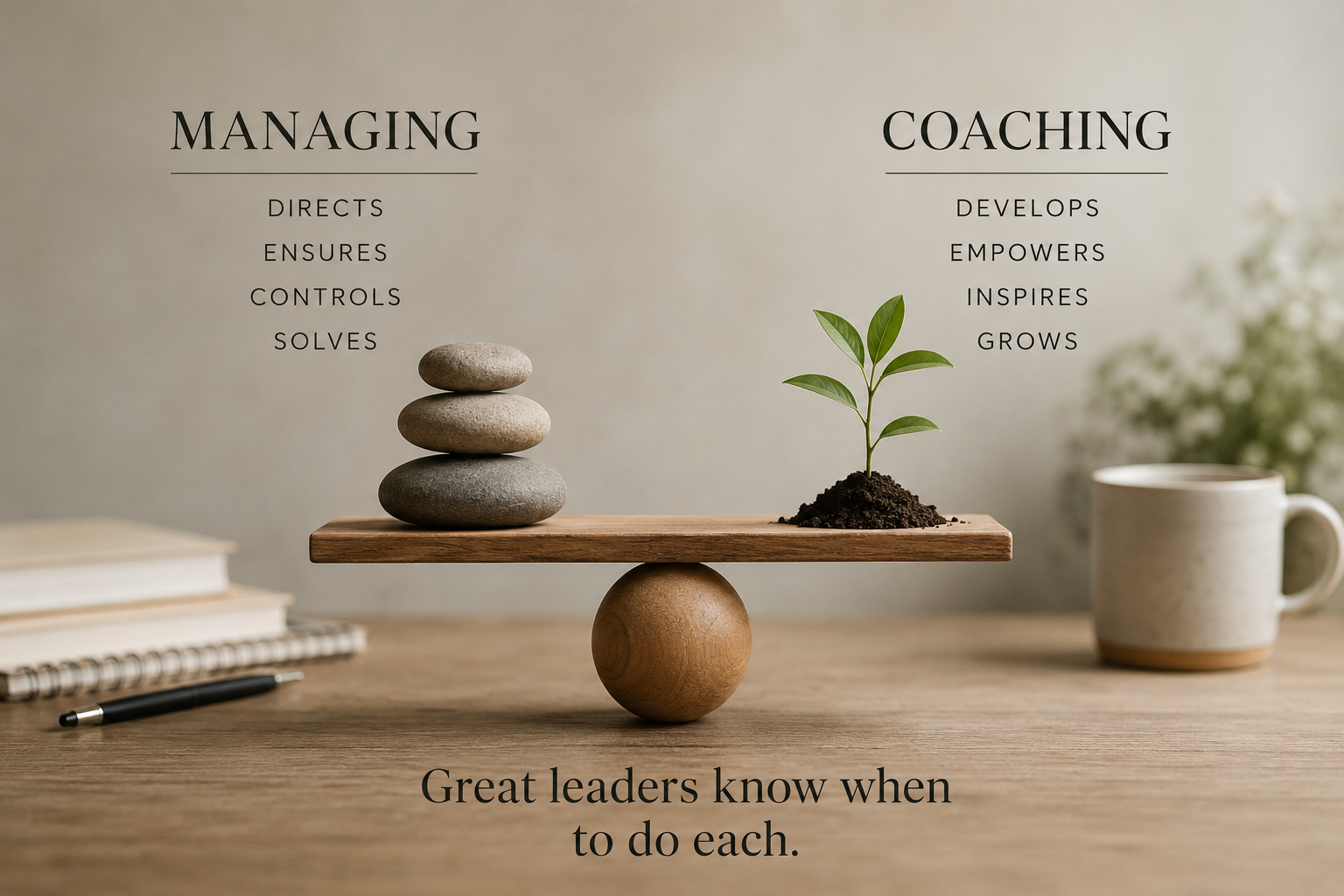
The Difference Between Managing and Coaching
Why great leaders know when to provide direction and when to create discovery.
One of the questions I hear most often from leaders is, "Should I be coaching my team instead of managing them?"
It's a fair question, especially as coaching has become one of the most talked-about leadership skills over the past several years. Somewhere along the way, many leaders started feeling as though managing was outdated and coaching was somehow the "better" approach.
I don't actually believe that's true.
In fact, I think it's one of the biggest misconceptions in modern leadership.
Management isn't the opposite of coaching, and coaching isn't a replacement for management. They're two different leadership tools, each serving a different purpose. The real challenge isn't deciding which one is better. It's learning when each one is needed.
Think about someone who's brand new to your team. They're learning systems, building confidence, and trying to understand what's expected of them. In those moments, clear direction isn't micromanagement. It's leadership. People deserve clarity, especially when they're still finding their footing.
Now imagine that same employee a year later. They've demonstrated competence, built experience, and developed confidence. They come to you with a challenge they've never encountered before.
As leaders, our first instinct is often to help. We share our experience, offer a solution, and tell them exactly what we would do. It feels supportive because we genuinely want them to succeed.
But what if there isn't an immediate deadline?
What if the greater opportunity isn't solving today's problem, but helping that person develop the confidence to solve the next one on their own?
That's where coaching begins.
Coaching doesn't mean withholding your knowledge or refusing to give direction. It means becoming curious before becoming instructional. Instead of immediately offering answers, coaching leaders ask thoughtful questions that help people organize their own thinking.
"What options have you considered?"
"What feels most important here?"
"What outcome are you hoping to create?"
"What might you be overlooking?"
Questions like these do something powerful. They communicate trust. They remind people they're capable of thinking through challenges rather than becoming dependent on someone else to solve every problem.
Ironically, coaching often takes more patience than simply giving the answer. It's faster to tell someone what to do. It's more rewarding to help them discover what they're capable of.
One of the biggest shifts I see leaders make is realizing they don't have to choose between managing and coaching. They simply need to expand their leadership toolbox.
Sometimes your team needs clear direction.
Sometimes they need encouragement.
Sometimes they need accountability.
Sometimes they simply need someone who believes they're capable enough to find the answer themselves.
Great leadership is rarely about having all the answers. More often, it's about knowing what the person sitting across from you needs most in that moment.
As leaders, we have opportunities every day to decide whether our greatest contribution is providing clarity or creating growth. Both matter. Both are valuable. The wisdom comes in recognizing when each approach will have the greatest impact.
Reflection
As you think about your own leadership, consider the conversations you've had over the past week.
Were there moments when your team genuinely needed direction?
Were there moments when you could have asked one more question instead of offering one more answer?
Leadership isn't about replacing management with coaching. It's about becoming intentional enough to know when each one will help the people around you grow.
Continue Your Leadership Journey
Leadership is a lifelong practice of learning, reflecting, and growing.
If this insight resonated with you, explore our Leadership Growth Pathways to discover free resources, professional development opportunities, coaching, and learning experiences designed to help you lead with greater clarity, confidence, and impact.
Get in touch
Copyright © 2025 | Above Coaching | All Rights Reserved
Download the Coach Starter Guide
Download the Professional Development Guide
Need a different payment option? We’re here to help.
We want this training to be accessible and aligned. If you're facing a financial hurdle or need to talk through a creative solution, please schedule a connection call below: